Old Rex, the father of the group, joined the ranks of Senior Citizens at the week-end and, as is our wont, we joined him to celebrate this mile-stone in his life. But we didn’t celebrate on the Wednesday evening, as is our custom, for Rex had promised a home-made pizza party and he suggested the Tuesday evening to give him time to prepare the dough. Who were we to disagree with the old fella? So we gathered at Rex’s place to consume a mountain of home-made pizza and copious amounts of red wine. Our thanks go to Rex for his hospitality but not for the way some heads felt in the morning.
Because of last night’s celebration, we opted for a short, local walk today. That’s why we were back on the Ayrshire Coastal Path doing the section from Maidens to Dunure, a very scenic, very familiar and very enjoyable part of the route. And to make it especially enjoyable for us today, the sun shone and the air was clear, soft and warm with just the hint of a sea breeze.
That this was to be a short, relaxed walk was evident from the start when we drove into Maidens, turned right along the sea front and drove on, and on, and on, finally parking just short of the caravan park. When eventually we did start walking, we took to the sandy beach. The nature of this walk is such that there are no extensive inland views, and seaward, there was only Arran and Ailsa Craig. The views today were confined to the immediate locality. But views were ignored as blethers were exchanged and watery sections were negotiated and we wandered along that beach hardly noticing our surroundings. Then the path climbed from the sand onto the crags of Culzean. Up through the burnet roses we climbed, up through the pine wood, and along through the gorse and blackthorn. On a clear area of soft, springy turf on a crag above the sea, we sat down for coffee, the first of the day.
Though Robert didn’t want to be the one to say it, we all knew what he was thinking. So, somewhat reluctantly, we packed up and moved on into Culzean estate.
We came to the Swan Pond.
That’s where the split in the ranks came. The leaders turned alongside the pond but some were for the cliff-top walk. After some discussion – well shouting, actually – it was decided that each party should go its different way, six along the pond and four along the cliffs agreeing to meet further along the path. Davie opted for the cliff path while his faithful companion, Holly, chose to go with the ponders. Some dugs, eh!
No matter which path was taken, Culzean wood was a sensual delight on this early June morning – scented and coloured by wildflower, alive with an opera of birdsong and dappled with warming sunlight. The budding botanists (pardon the pun) tried to identify the flowers while the fledgling birders (sorry) tried to identify and place the different birds by song. On the whole this was successful with only the more difficult remaining a mystery.
The two groups came together at the Battery and wandered casually through the formal gardens. The herbaceous border was coming into full summer flower and Robert showed off his horticultural knowledge by naming the plants, much to the astonishment of the ignorant. Only two escaped identification. While Jimmy came to the rescue with one, the other had to remain a mystery. It was not that they didn’t know what it was but at their age recollection is an increasing problem. So, in ignorance, we walked on.
In front of the castle two men were digging a deep and perfectly rectangular hole in the lawn. The curious were curious. It turned out that there was a burst water main. The two were waiting for the water folk to turn off the water. The water men couldn’t do this until the fire service had a tender in place just in case a fire should suddenly break out. The fire service couldn’t say when they would have a tender available. So the men just stood waiting, occasionally looking into their perfectly dug hole. We left them to it.
‘There’s a tea room at the home farm’, said one. There certainly was. At a couple of tables outside in the sun, we sat and had coffee and cake. ‘This reminds me of Mosset’, said one relaxing over his espresso ‘All this sitting about in the sun drinking coffee’. We had to agree. ‘Why can’t we have more walks like this?’ asked Allan. And why not indeed!
We came back onto the beach just north of Culzean Gas House. Half an hour of sand, shingle and one particular rocky area where Jimmy was asked if he need his hand taken (see 20 May 2009), brought us to a gently sloping sandstone outcrop. We had lunch there. Despite the annoying flies that buzzed about our heads, we had a long lunch break. (Why can’t we have more walks like this?)
But, there comes a time.......
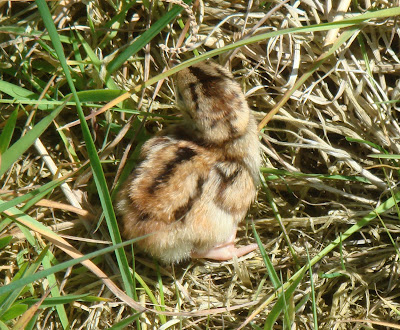
The beach was sandy with a shingly edge on the landward side. The oystercatcher gave herself away by her panicky calling at Holly. ‘There’s a nest in the shingle’, said the ornithologist and set off in search. His labours were not in vain. Though he didn’t find the nest, he did find two fluffy chicks playing possum in the shingle. We all went for a look while the parent bird screamed its annoyance over our heads. The chicks, mottled and camouflaged, lay perfectly still with an attitude of ‘I’m not a bird. I’m only a stone. Go away and leave me alone’. (Poetic birds then? – Ed.) We left them alone and continued along the beach.
The path left the beach after a while and zigged and zagged steeply up a high grass slope. What Johnny had in his lunch box we don’t know but we could all do with some. What a cracking pace he set on this up-slope. Conversation, which had been a feature of our relaxed walk, dried up as the slope and Johnny’s pace took its toll. And those at the end thought he would never stop. But he did. Where the path entered a field, he stopped. It was only for a moment or two though, just long enough to let us mere mortals catch up then he was off again but this time more slowly.
We were now high above the sea on the edge of a field where sweet corn and thistles poked their heads through rows of plastic covering. On our left the ground fell away in steep crags to the sea below, a meeting that was hidden from us by stunted shrubby trees and patches of gorse. Some of this shrubbery, which at first glance looked like blackthorn but had strange elongated fruits, was beyond the ken of he who should know and remains another of his ‘must find outs’.*
The path continued to slope upward at the side of the fields, upwards past an abandoned WW2 look-out turret, up towards the Dunure road. At the roadside we reached the highest point of the day and the path dropped seaward once more. Down through the shrubbery it led us. Round a corner and there was Dunure castle in front of us, its short cropped grass park busy with sight-seers. But before we left the rank grasses to join the park, the walk had one more joy to show us. On the very path in front of us more young chicks scurried away in panic. In the long grass, disturbed by Holly, a mother cheeped to attract the chicks. What it was we can’t be quite sure for it hid itself well. The closest the ornithologist could fathom, despite a valiant search, was that it was either a partridge or a pheasant (Well it was running away through the coarse grass with its head down.) It was still a pleasure to see the chicks no matter what they were.
A seat in the sun by Dunure Castle was followed by a small refreshment in the Anchorage Bar. In a relaxed moment Allan was heard to ask himself, ‘Why can’t we have a walk like this every week?’
The Ayrshire coast is a fine place on a fine day. This was a fine day and this part of the coast gave us a great walk. But not as great as The Cobbler.
* The shrub in question was sea buckthorn.
Photos by Johnnie
Because of last night’s celebration, we opted for a short, local walk today. That’s why we were back on the Ayrshire Coastal Path doing the section from Maidens to Dunure, a very scenic, very familiar and very enjoyable part of the route. And to make it especially enjoyable for us today, the sun shone and the air was clear, soft and warm with just the hint of a sea breeze.
That this was to be a short, relaxed walk was evident from the start when we drove into Maidens, turned right along the sea front and drove on, and on, and on, finally parking just short of the caravan park. When eventually we did start walking, we took to the sandy beach. The nature of this walk is such that there are no extensive inland views, and seaward, there was only Arran and Ailsa Craig. The views today were confined to the immediate locality. But views were ignored as blethers were exchanged and watery sections were negotiated and we wandered along that beach hardly noticing our surroundings. Then the path climbed from the sand onto the crags of Culzean. Up through the burnet roses we climbed, up through the pine wood, and along through the gorse and blackthorn. On a clear area of soft, springy turf on a crag above the sea, we sat down for coffee, the first of the day.
Looking back towards Maidens

Maidens!

What a pleasant spot this is, sheltered as it is by the surrounding gorse and blackthorn and dotted with the yellows and whites and blues of wildflowers. And catching the full sun today was a bonus. We sat for some time over coffee, enjoying our surroundings and looking seaward to where oystercatcher ‘peeped’ above the rocks and gannets wheeled and dived, plunging arrow-like into the water. Yes, this was a delightful spot today. And we sat for a while.
Maidens!

Though Robert didn’t want to be the one to say it, we all knew what he was thinking. So, somewhat reluctantly, we packed up and moved on into Culzean estate.
We came to the Swan Pond.
That’s where the split in the ranks came. The leaders turned alongside the pond but some were for the cliff-top walk. After some discussion – well shouting, actually – it was decided that each party should go its different way, six along the pond and four along the cliffs agreeing to meet further along the path. Davie opted for the cliff path while his faithful companion, Holly, chose to go with the ponders. Some dugs, eh!
No matter which path was taken, Culzean wood was a sensual delight on this early June morning – scented and coloured by wildflower, alive with an opera of birdsong and dappled with warming sunlight. The budding botanists (pardon the pun) tried to identify the flowers while the fledgling birders (sorry) tried to identify and place the different birds by song. On the whole this was successful with only the more difficult remaining a mystery.
The two groups came together at the Battery and wandered casually through the formal gardens. The herbaceous border was coming into full summer flower and Robert showed off his horticultural knowledge by naming the plants, much to the astonishment of the ignorant. Only two escaped identification. While Jimmy came to the rescue with one, the other had to remain a mystery. It was not that they didn’t know what it was but at their age recollection is an increasing problem. So, in ignorance, we walked on.
In front of the castle two men were digging a deep and perfectly rectangular hole in the lawn. The curious were curious. It turned out that there was a burst water main. The two were waiting for the water folk to turn off the water. The water men couldn’t do this until the fire service had a tender in place just in case a fire should suddenly break out. The fire service couldn’t say when they would have a tender available. So the men just stood waiting, occasionally looking into their perfectly dug hole. We left them to it.
‘There’s a tea room at the home farm’, said one. There certainly was. At a couple of tables outside in the sun, we sat and had coffee and cake. ‘This reminds me of Mosset’, said one relaxing over his espresso ‘All this sitting about in the sun drinking coffee’. We had to agree. ‘Why can’t we have more walks like this?’ asked Allan. And why not indeed!
We came back onto the beach just north of Culzean Gas House. Half an hour of sand, shingle and one particular rocky area where Jimmy was asked if he need his hand taken (see 20 May 2009), brought us to a gently sloping sandstone outcrop. We had lunch there. Despite the annoying flies that buzzed about our heads, we had a long lunch break. (Why can’t we have more walks like this?)
But, there comes a time.......
The beach was sandy with a shingly edge on the landward side. The oystercatcher gave herself away by her panicky calling at Holly. ‘There’s a nest in the shingle’, said the ornithologist and set off in search. His labours were not in vain. Though he didn’t find the nest, he did find two fluffy chicks playing possum in the shingle. We all went for a look while the parent bird screamed its annoyance over our heads. The chicks, mottled and camouflaged, lay perfectly still with an attitude of ‘I’m not a bird. I’m only a stone. Go away and leave me alone’. (Poetic birds then? – Ed.) We left them alone and continued along the beach.
A chick in the grass - easily missed - but not our eagled eyed bunch

We were now high above the sea on the edge of a field where sweet corn and thistles poked their heads through rows of plastic covering. On our left the ground fell away in steep crags to the sea below, a meeting that was hidden from us by stunted shrubby trees and patches of gorse. Some of this shrubbery, which at first glance looked like blackthorn but had strange elongated fruits, was beyond the ken of he who should know and remains another of his ‘must find outs’.*
The path continued to slope upward at the side of the fields, upwards past an abandoned WW2 look-out turret, up towards the Dunure road. At the roadside we reached the highest point of the day and the path dropped seaward once more. Down through the shrubbery it led us. Round a corner and there was Dunure castle in front of us, its short cropped grass park busy with sight-seers. But before we left the rank grasses to join the park, the walk had one more joy to show us. On the very path in front of us more young chicks scurried away in panic. In the long grass, disturbed by Holly, a mother cheeped to attract the chicks. What it was we can’t be quite sure for it hid itself well. The closest the ornithologist could fathom, despite a valiant search, was that it was either a partridge or a pheasant (Well it was running away through the coarse grass with its head down.) It was still a pleasure to see the chicks no matter what they were.
A seat in the sun by Dunure Castle was followed by a small refreshment in the Anchorage Bar. In a relaxed moment Allan was heard to ask himself, ‘Why can’t we have a walk like this every week?’
The Ayrshire coast is a fine place on a fine day. This was a fine day and this part of the coast gave us a great walk. But not as great as The Cobbler.
* The shrub in question was sea buckthorn.
Photos by Johnnie


